
Leak tracing and targeted repairs
We locate the entry point and repair the component that failed, whether the leak shows up near a vent pipe, a wall line, a valley, or a roof penetration.
Serving San Marcos, Texas & surrounding areas
Stop leaks fast, document storm damage, and get a clear repair plan so your roof protects your home through the next round of Texas weather.
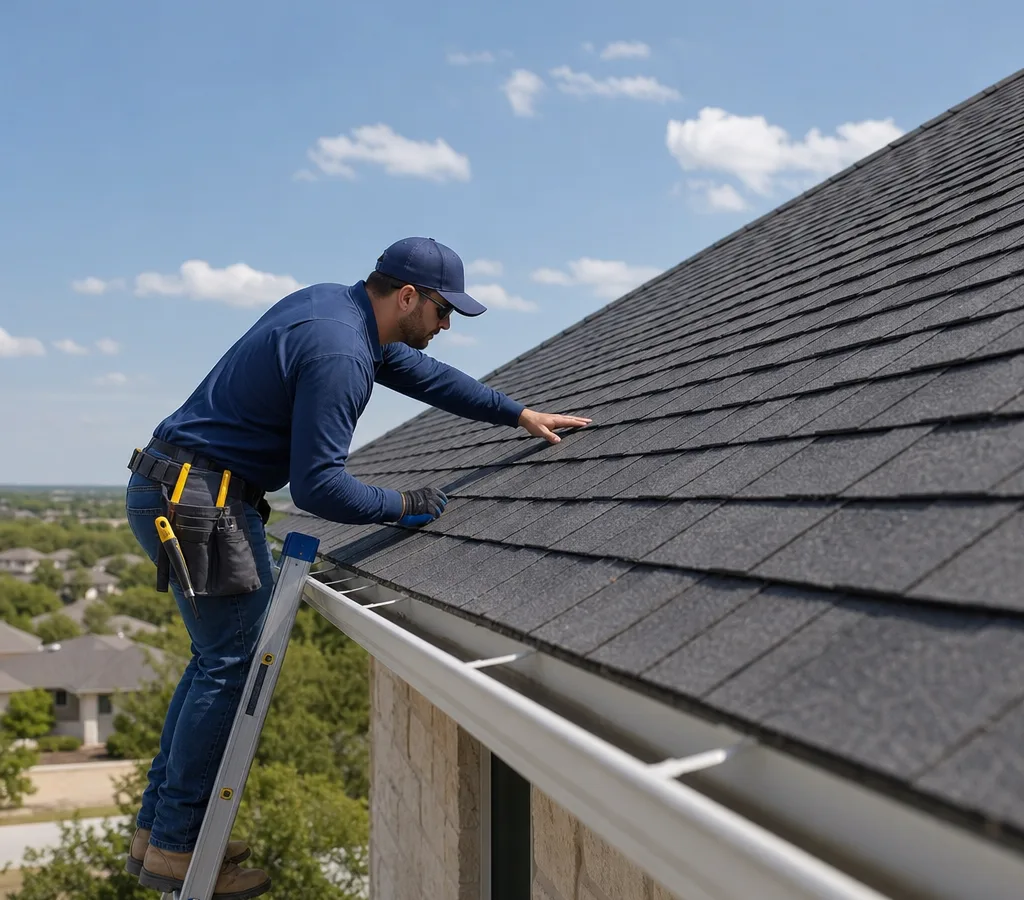
If you searched for roof repair San Marcos TX, you are probably dealing with an active leak, missing shingles, or storm damage that needs attention before it spreads into decking, insulation, and drywall. Roofing San Marcos repairs the roof system the way a roofer should: we track the water path, confirm the failure point, and repair the detail that actually failed.
In Central Texas, a lot of roof problems show up after high winds and hail, then get worse when the next heavy rain finds the weak spot. Leaks also start around the details that move and age faster than the field shingles: pipe boots, step flashing along walls, chimney flashing, and skylight curb seals. A good repair is specific and targeted. It is not a tube of caulk and a quick promise.
San Marcos has everything from newer subdivisions to older homes near Texas State University. That mix matters because roof styles, attic ventilation, and the layers under the shingles can vary. We adjust the repair approach to what is actually on your roof, not a one-size checklist.
When you want a broader view of options from a local crew, San Marcos roofers can help you sort out what is repairable now and what might be better planned for later.
We locate the entry point and repair the component that failed, whether the leak shows up near a vent pipe, a wall line, a valley, or a roof penetration.
We replace torn, creased, or missing shingles and ridge materials, then re-seal and re-fasten where needed so the repair holds in future gusts.
Flashing is the most common reason a roof that looks fine still leaks. We repair or replace step flashing, counterflashing, and valley metal when it is bent, lifted, or rusted.
Cracked rubber boots and loose collars leak steadily and are easy to miss from the ground. We replace boots and re-flash penetrations properly.
We can document roof conditions after a storm and provide a clear written scope of repair so you have a practical plan for next steps.
When active water intrusion is the priority, we can stabilize the area and protect the interior until the permanent repair can be completed.
Most callbacks come from repairs that treat the symptom instead of the cause. Water can enter at one point, travel along the underlayment or decking, then show up in a different room. That is why we start by checking the roof plane above the stain, the penetrations, the flashing lines, and any valleys that channel runoff.
A lasting repair usually includes three things:
If your roof leak started after hail or wind, it is also worth checking for lifted edges and broken seal strips around the impact area. Even when a roof is not actively leaking today, those broken seals can become a leak during the next hard rain.
For homeowners specifically looking for roof repair San Marcos, the most helpful first step is a thorough inspection with photos and a written scope so you can compare bids on the same work.

A clear sequence helps us trace the leak, define the right repair, protect the water-shedding path, and document the completed work.
We inspect the suspected areas on the roof and, when appropriate, check the attic side for water tracks, wet decking, and ventilation issues that can mimic a leak.
You get a straightforward explanation of what failed, what needs to be repaired now, and what can be monitored. We prioritize the work that protects the home.
We complete the repair using the right flashing, fasteners, and seal methods for the detail. We then re-check the surrounding courses and transitions so the water path is continuous.
We document the repaired area with photos and clean up the work zone. If we find additional items that affect the repair, we discuss them before expanding scope.
Most roof repair jobs in San Marcos typically run about $250 to $1,200, depending on the leak source, roof pitch, and how much material has to be replaced. A small repair like a pipe boot or a few shingles is often $250 to $600, while flashing repairs or multiple damaged areas commonly land in the $650 to $1,200+ range.
Your price depends on access and safety setup, the roof type and layers, whether decking or underlayment is wet or damaged, and how much matching material is required. Exact cost is confirmed after an on-roof inspection and a written repair scope.
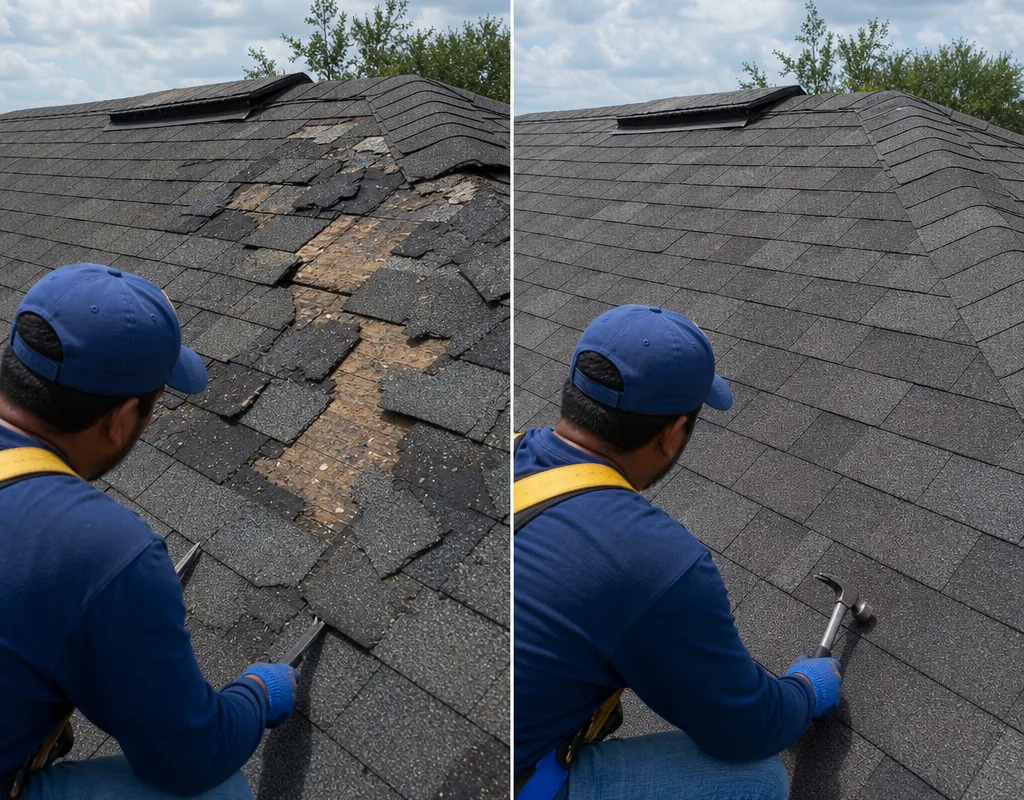

For an active leak, the priority is stopping water intrusion, so we focus on the earliest available inspection and, if needed, a temporary dry-in until the permanent repair can be completed. Timing depends on weather conditions and safe roof access, especially after storms when many homes need help at once.
The most common leak sources are flashing failures at walls and chimneys, worn pipe boots at vent penetrations, and wind damage that breaks shingle seal strips or tears ridge caps. Heavy rain and wind-driven rain expose small weaknesses quickly, which is why leaks often show up after a storm cycle.
Yes, we can often repair the leak even when a perfect shingle match is not available by focusing on the failing detail, such as flashing or penetrations, and using the closest available match where replacement shingles are required. We will explain what will be visible from the ground and what options you have before proceeding.
A necessary repair to prevent further interior damage is often the responsible move, but documentation matters. We recommend taking photos of the roof condition before and after any work and keeping the written scope so you can clearly show what was damaged and what was repaired.
It is usually a repair when the issue is isolated to a penetration, flashing line, or a limited damaged area and the surrounding roof is still sound. If we find widespread brittle shingles, repeated leaks in multiple locations, or decking deterioration, we will explain why a larger scope may be more practical than chasing one leak at a time.
Many leak calls come from low-slope transitions, patio tie-ins, or areas with limited drainage. During inspection we confirm the roof type and the waterproofing method in place, then recommend repair materials that are compatible with that system rather than mixing products that do not bond well.
Tell us what you are seeing (leak location, storm date, and any interior staining). We will inspect the roof, explain the cause in plain language, and provide a written scope for the repair.